

Windows
A short story.

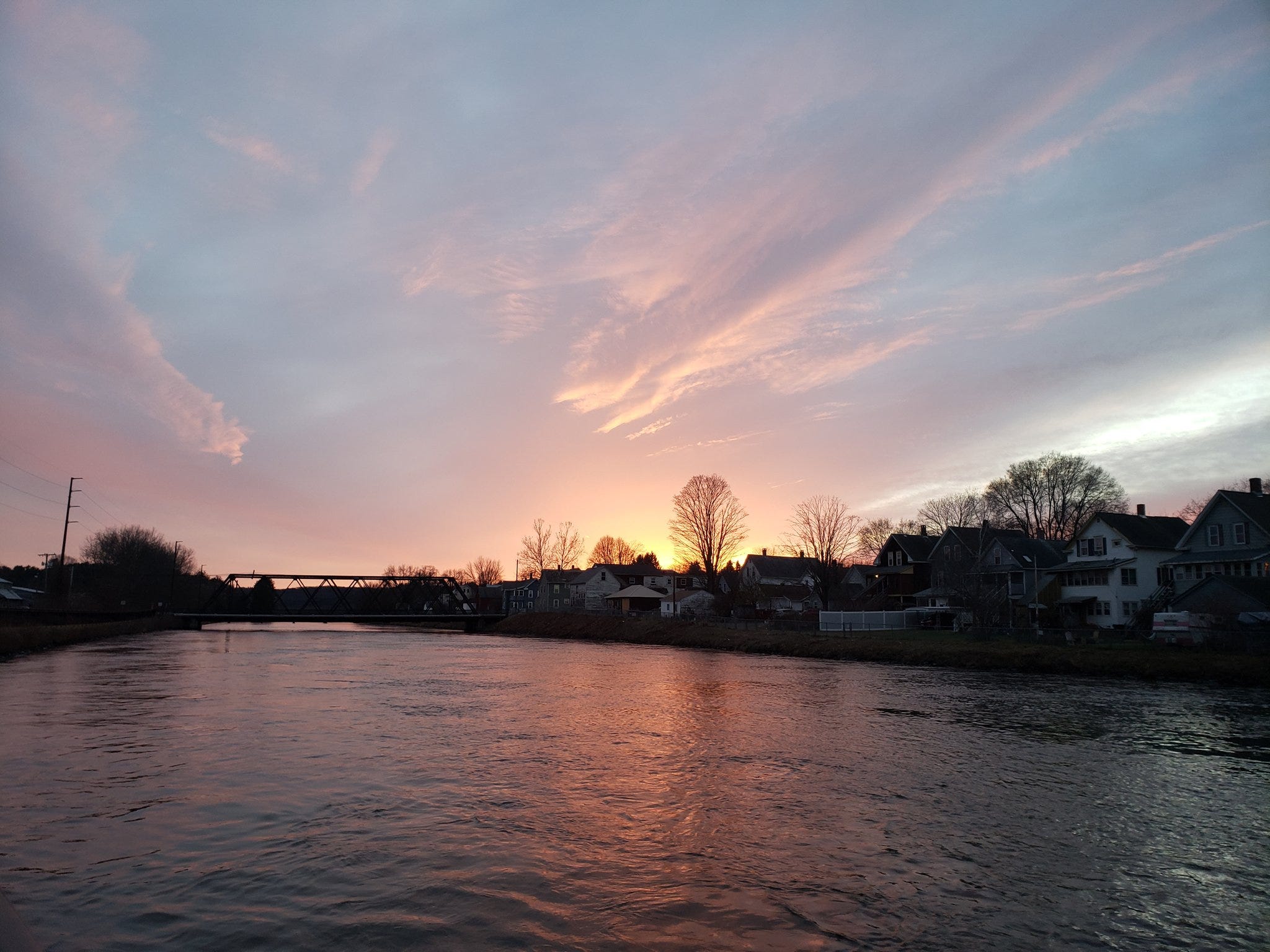
I moved back to Massachusetts in September 2022 after a six-year stint in New York City. I drafted the following story, newly revised, during my first weeks home in the commonwealth. It’s the first in an extended cycle of stories set in what I’ve come to call Fallston, Massachusetts. Thanks for reading.
Last fall I moved to brick-tombed Fallston by the river, leaving September and New York behind, and tried to begin again.
Before the bad sales run and the layoffs I’d stashed away enough cash to survive for a while but out of some Puritan need to build shelter I started cold-calling small business owners in hope of steady work. They weren’t buying. Words like Well and Uhm and Next Year pockmarked our conversations. I gave up after a day and paced the path beside the river and gazed at the autumn-bronzed hills. I met a woman named Rachel at a local dive and for a few October weeks we conquered mountains, drank cheap cider, desperately loved on the small mattress in my apartment, and fought about how much or how little we cared for each other. One night she told me she’d fallen for a Vermonter on a dating app, bagged her things and turned the page on our story.
As I watched her brake lights wink over the bridge out of town, I thought of two things: how uneasy the great plumes of stars in the sky still made me feel, so different from the cities where I belonged, and how jealous I was that she found truth or destiny or whatever it was through the world in the palm of her hand.
November entered town as a downpour. Fallen leaves whispered into sewer drains. People wore thicker coats, even though it was still warm and most nights you could hear the shiver of a nearby air conditioner. My bank account scared me into becoming a full-time caretaker. Up and down the valley I fed people my father’s age with a spoon and girded my stomach as I wiped their asses clean. My minimum wages waited for me weekly in a squat white building where a man named Ethan who couldn’t stop his hands from shaking handed out the checks. On Tuesdays, a day off, I’d see him enthroned on a porch near the center of town. He always had a smartphone held close to his face. Beside him an old woman sat on a broken electric scooter and clutched a green comforter. Her skin was so dry the breeze chipped her to pieces.
Eventually the company assigned me to help a man named Tim. Five days a week I slalomed the uneven rural routes to his house, a hoary two-floor encircled by a yellow-crisp lawn. His outgoing caretaker Alice showed me the routine. She was quitting to become a manager at the fast-food burger place by the highway. I phantomed Alice’s steps as she told me Tim once loudly ran three gas stations before his wife passed away and dementia silenced him. In the kitchen, Alice dropped a plate of apple sauce and as sugary globs spread across the linoleum, amusement flickered in Tim’s grey eyes. Tim said things with the corners of his mouth, too.
Tim and I established a routine. The care company wanted me to limit the amount of TV he watched while I was around but I didn’t care. One time I slept in and showed up a couple hours late, so I stuck around, cleaned up and made him dinner. Left him to his TV while I stepped out to smoke in the twilight and watch fog billow against the marigold hills. When I went back inside Tim wasn’t in the living room. I shut the TV off and called his name. I found Tim in the hallway upstairs by an open closet door, hands moving in repeated legato between his face and hands. Later, I found a sign language dictionary online and learned he’d been signing Woman and Beautiful.
Three days later I was washing long-neglected dishes when a young woman entered Tim’s kitchen. Before I could say something she swooped down to hug Tim. A rusty laugh exploded out of him. As Tim clutched her, his body seemed to strengthen, arms spread around her like arcs of electricity.
Then she turned to me and stuck her hand out.
Cassady, she said.
Zack, I said.
She told me she was Tim’s niece. I said that was cool.
Cassady sat beside Tim and spoke to him in a low voice, her words fluid and indistinct. Like they had their own private language. I let myself outside the back door and smoked and watched a Cessna drift above the treetops. Cassady walked past me and around the side of the house, then returned with a basket full of clothes. She told me she’d been washing her clothes at Tim’s for months, but I hadn’t seen her. She asked how I’d started working with Tim, and I told her, then followed her down into the basement and answered more of her questions while she loaded the washing machine. We split a cigarette by the storm doors and watched spiders flee as the smoke ghosted through their webs.
Have you seen them yet? she asked.
Seen who? I asked.
The people.
In town? Yeah, they’re a bunch of freaks.
The people in the house, she said. It’s haunted as hell.
I haven’t, no.
Stick around long enough and you will. I don’t think it’s like a poltergeist thing or anything. More like, I don’t know, they’re imprinted on the house. Or Tim. I think he draws them in.
What makes you say that?
Just the vibe he gives off.
While Cassady finished her laundry I made Tim lunch. He sat at the table and began to sign words in American Sign Language. Beautiful. Woman. Hello.
Yeah, she’s pretty, I told him.
After work I wandered around town, draining a plastic flask of bourbon and staggering across an economic divide and back again. On one side stretched pearl-shine condos and polished cars lined like show dogs; on the other, crumbling porches and open-air dumpsters, where skunks thrashed and made love and birthed children and clouded the air with their noxious panic.
A week later on a stark December day I woke up to a text from Cassady. Come on a trip with us, she wrote. Just got some nice magic caps.
I agreed and planned to put in my morning shift with Tim before meeting with her friends at the nearby state forests. At Tim’s house I found him squatting in the living room with photos spread at his feet in a semi-circle. Pictures of Tim and his wife at a lobster bake. On a hiking trail. Eating at a diner. Kissing in a boat on a river. Tim ignored me as I worked my chore list and prepared his breakfast. Ignored my prompts for mealtime. The clock on the wall dogged my steps. I wanted to get going. I wanted Cassady to like me enough that she might comfort me a while.
I placed Tim’s plastic-lipped dish beside him and told him I had to go, that I’d check in soon, that I was sorry.
Tim pointed at the couch as I stood.
What? I asked.
Tim signed Woman.
What about a woman? I asked.
Tim pointed again.
A woman’s couch? Your wife’s?
Woman, he signed. Beautiful, he signed.
Beautiful woman, I said.
Tim signed Yes.
A beautiful woman on the couch.
Yes.
Right there?
Yes.
Do you want me to do something?
No, Tim signed.
We stared at each other for a few moments before Tim turned back to the photos. I no longer mattered.
I left the house and drove across the border to Vermont. A few high gray clouds smeared the sky. Interference hounded every radio station. Hawks monitored the road for breakfast. One rural route became another, then another, until I found Cassady with three of her friends loitering in the trailhead parking lot.
Cassady pressed a small plastic bag in my hand containing golden-brown mushroom caps and blue-tipped stems. I forced them down my throat before remembering the water bottle in my car. Cassady’s friends smiled and nodded but didn’t introduce themselves.
Whatever notion I had of a simple drug-fueled walk in the woods melted away as the push upward began. This was a real hike. I was unprepared, trudging in the shit-sole sneakers I wore at work to be comfortable. I rationed the water as best I could but the grip of the mushrooms descended and the world grew slick and the trail drove us higher through birch and pine. Soon I was out of water. A speaker dangled from Cassady’s backpack and folk punk beats bounded away like coyotes. At the first outcropping we stopped and spread out across the grass-licked stone. My breath returned in slow, painful swallows. The valley stretched autumn-roasted around the bone of the highway, or maybe the highway coursed through the lung of the valley, and the cells of nearby towns. A body I didn’t yet understand. I wondered if the people who lived around here loved and feared the same things I did. There are only so many things for a person to love and fear.
This hike is too hard, one of Cassady’s friends said. She gripped a bright blue water bottle in one hand and squeezed a tree-root with the other.
It’s barely a hike, said Cassady. This thing is what, 1,500 feet tall?
Too much, said the friend.
We fell to our knees at the peak. I drank the last specks of water from Cassady’s bottle while she cried with joy; even I was moved to tears. The world called back in its immensity, and we knew no before, no end, just the peak and the valley and the fire in our muscles. I sat beside Cassady and she rested an arm on my shoulder. I welcomed her closeness but knew it wasn’t real, because I knew I wouldn’t stay in Massachusetts long. We’d climbed the mountain to begin the end. It could never be more. I was going to ask Cassady if I should quit my job but then one of her friends howled like they’d been stabbed and threw their backpack over the ledge. The bag fell apart against the mountainside until we lost sight of it. I felt hot, sick, proud, everything.
Back at the parking lot I asked Cassady if she wanted to come home with me. She took my hand and pressed her forehead against my chest, pushing hard like she wanted to leave a bruise. Then she let go and limped after her friends, dragging an ankle, an injury I’d never noticed before. I felt an urge to provide for Tim but I couldn’t find the key when I returned to his house. There was Tim through the windows with his pictures. He glowed as the day’s last sunlight cooked the room and a faint outline of a woman, a smudge really, sad and beautiful, sat beside him and watched.
I put my back to the side of the house and slid to the ground. Desperate for contact, for connection, for anything, I took out my phone and texted Rachel, I’m sorry for the things I said. Hope you’re alright out there. Take care now.
Then I watched the day end then peeked through the window again. Tim sat alone, photos in his hand. Beautiful, he signed, over and over.
I decided to drive east that night. I wanted home, but not the fragile one I’d carved out here. My parents still lived in Montford, so after a while I returned to the road. Shadows stalked the highway through the scoured heartland of Massachusetts. My face transfigured and mouthed warnings and encouragements from the trunks of ten thousand trees. I read every road sign aloud. When I arrived, I took the spare key under the broken lawnmower out back and let myself in. My parents slept on opposing couches in the living room, their bodies bathed by the light of late-night news. I crept upstairs to the spare bedroom and climbed into bed. I felt the visceral skin-clench, how the body understands it’s being watched. Eyes closed, I formed an image of my grandmother and her son, the uncle I never met, the uncle who died at twelve when another car T-boned theirs. Both watched me from across the room. Or maybe it was just their echo. I don’t know if I want to know the truth of that sort of thing. But I was glad they were there, if they were there.
My phone shook. Text from Rachel. I miss you, she wrote.
How are you? I wrote back.
Not great.
Me too.
And we continued that way, fingers in distant communion, until sunrise pinked the windows back to life.